Medication can be used to relieve symptoms and for pain relief. At the end-of-life stage consideration may be needed about how medication may be given. Medications should be reviewed regularly and may change on a regular basis.
Medications can be given via different routes and in different forms:
- Tablets: Some individuals with a learning disability may find it difficult to take tablets and this often becomes a problem for people at the end of their life. If you notice the individual chewing the tablet or having difficulty swallowing the tablet, then these needs reviewing by the GP.
- Liquids: Some medication can be given in liquid or syrup form; these may be easier for the individual to swallow but sometimes they can taste unpleasant.
- Patches: Worn on the skin patches stay in place for several days and medication is absorbed via the skin.
- Injection: Normally given by nursing staff
- Syringe Driver: Some individuals at the end of their life may require a syringe driver; this is a small portable device with a fine needle that is inserted under the skin so that medication can be given easily to help symptom control.
Pain management
Pain is only one symptom that’s recognised at end of life; individuals may suffer other symptoms such as breathlessness, loss of appetite, problems with continence and constipation. It’s important to remember that some individuals with a learning disability are unable to tell us if they are in pain, and they are therefore reliant on family, paid carers and professionals to be able to observe an individual’s behaviour and note changes which may indicate distress. Once a baseline has been obtained to identify pain indictors it is important to monitor the effectiveness of any pain medications given and document this.
Medications used to treat pain (analgesics) work in different ways. Some medications that are not traditionally known as painkillers may be beneficial as Gabapentin. The other group of medications to treat pain are known as Opioids such as Codeine or Morphine.
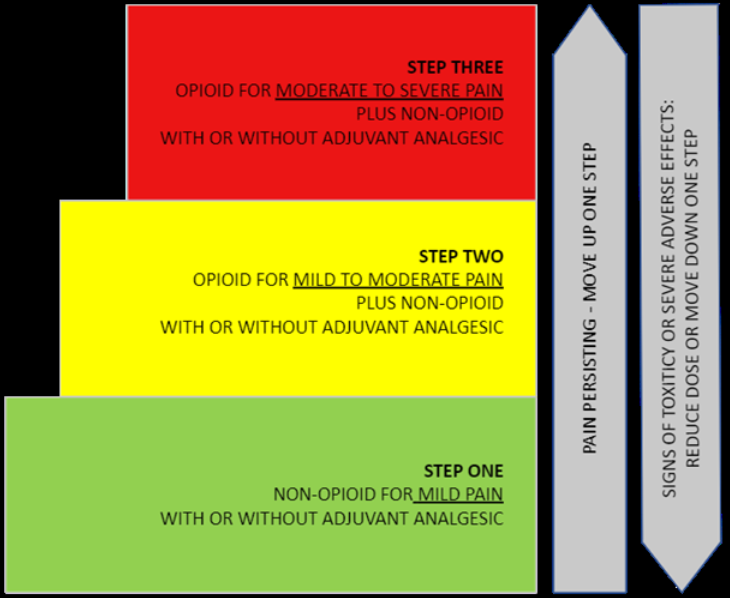
The individual’s doctor will carefully plan a regime of pain management ensuring that levels of pain relief used are appropriate for the individual’s level of pain. Below is a diagram showing how pain relief medication may step up in line with increasing pain, adapted from The World Health Organisation’s (WHO) Pain Relief Ladder.
Side effects
There are three common side effects of pain medication, the nurse or GP can advise on
treatments to help with these side effects.
- Drowsiness: Usually wears off a few days after starting the medication.
- Sickness: Gradually this should ease off after a few days, but you can have an anti-sickness drug to take away these effects.
- Constipation: Most people need to take a laxative when on pain medication to relieve this symptom.
Anticipatory prescribing
As an individual approaches their last few days of life, there may be a need for different medications to be available ‘just in case’ to ensure the individual is comfortable and pain free during this time. The need for this medication may arise outside of the ‘normal’ operating hours of a GP practice but the individual may not want or need a hospital admission. Anticipatory prescribing allows medication to be prescribed before it is needed but to kept in the home ready for when the time of need may come. The use of this medication will be assessed and managed by the health professionals involved.
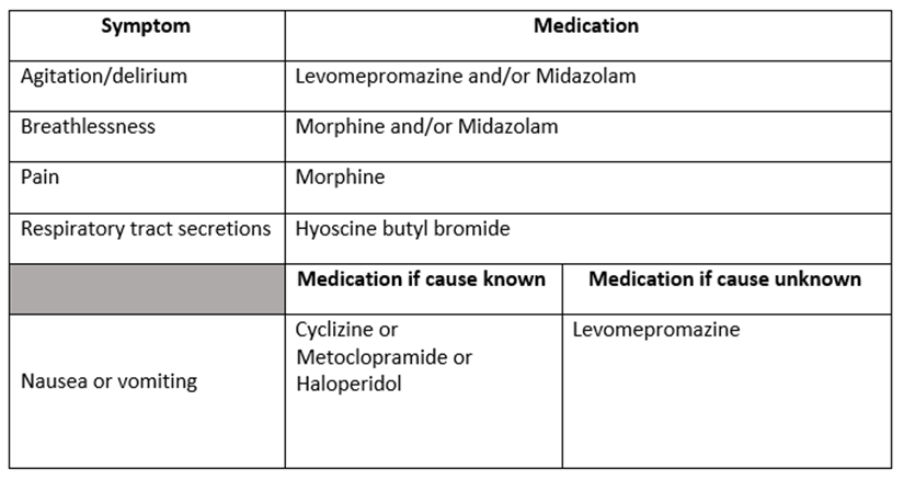
Below is a table with some examples of medications used to treat different symptoms. This is an example only and all medications should be prescribed by an appropriate clinician and administered by those trained to do so. All medication should be reviewed on a regular basis and doses changed when necessary to ensure optimal symptom management. Once medications are no longer required; they should be taken to a pharmacy to be dispensed of in a safe manner. Some drugs will need to be checked and receipted by the pharmacist.